
On the Slovak bank of the Dunajec river, where the limestone cliffs of the Pieniny rise over the water and wooden rafts drift through the gorge along the border with Poland, stands a monastery with red-tiled roofs. It’s called Červený Kláštor, the Red Monastery. Some 250 years ago it was home to a monk the whole region still talks about: Brother Cyprian, the pharmacist, healer and herb collector remembered in legend as “the flying monk”.
His name lives on in the Cyprian’s Apothecary teas from Agrokarpaty. Here is the story of the man behind the name: what we know for certain, what belongs to legend, and the remarkable herbarium he left behind.
The Red Monastery
The monastery’s story begins in 1319, when a local nobleman gave land for a religious house beside the Dunajec. The first monks were Carthusians. They left in the 16th century, and after decades of decline the monastery was given to the Camaldolese, who arrived in 1711.
The Camaldolese were an unusual order. They lived as hermits, each monk in his own small house within the monastery walls, keeping long periods of silence. They also worked the land: they farmed, kept bees and grew medicinal herbs. The ruins of their little houses can still be seen today.
The name comes from the building itself. Its red-brick details, the cornices under the roofs and the ribs of the vaults, and its red roof tiles gave it the name Červený Kláštor, the Red Monastery.
Who Was Brother Cyprian?
Brother Cyprian was born Franz Ignatz Jäschke on 28 July 1724 in Polkowice, in Silesia (today in Poland). He is thought to have studied in Poland and Moravia, and possibly in Italy, before entering the Camaldolese order and taking the name Cyprian.
He spent the last two decades or so of his life at the Red Monastery, where he became its pharmacist and healer. He was known as a “master of a thousand crafts”: he worked in medicine, pharmacy, botany and alchemy, and also in mechanics and astronomy. He laid out a monastery garden of medicinal and ornamental plants, and he prepared herbal remedies and tinctures for the monastery pharmacy.
Brother Cyprian died at the Red Monastery in 1775, aged 51. Seven years later, in 1782, Emperor Joseph II dissolved the Camaldolese community as part of his reforms of the religious orders.
The Legend of the Flying Monk
Cyprian is best remembered for a story that has kept historians, engineers and storytellers busy for more than 200 years.
According to legend, he built himself a pair of wings, or a glider, and launched himself from the Three Crowns (Tri koruny), the famous peak that towers over the Dunajec gorge. The versions differ on where he landed:
- In one, he glided safely down into the courtyard of the Red Monastery.
- In another, he flew all the way to the High Tatras.
- In the most dramatic, he flew over the lake of Morskie Oko and was turned to stone. A rocky peak above the lake is still called Mnich, “the Monk”.
There’s no historical evidence that Cyprian ever flew. Some suggest that, if he studied in Italy, he may have come across Leonardo da Vinci’s sketches of flying machines. Either way, the legend says a great deal about how his neighbours saw him: a curious, inventive man who seemed capable of anything.
In 2024, to mark the 300th anniversary of his birth, the National Bank of Slovakia issued a silver €10 collector coin in his honour. It shows Cyprian holding a bundle of herbs, alongside his flying machine, the Red Monastery and the Three Crowns.
Cyprian’s Herbarium: Slovakia’s Oldest Surviving Herbal
Brother Cyprian’s real and lasting legacy is his herbarium. Between 1766 and 1771 he gathered plants from the Pieniny and the nearby Belianske Tatras, pressed and dried them, and bound them into a leather-covered book.
- It holds 283 pressed plants on 97 pages.
- The plants are described in several languages, including Latin, Greek and German, with occasional local folk names.
- For each plant Cyprian noted where it grew and how it was used in medicine, in cooking, and even in folk magic.
- It is regarded as the oldest surviving herbarium from the territory of Slovakia.
The book had quite a journey. After Cyprian’s death it stayed at the monastery, then passed to a local aristocrat, who donated it to the Carpathian Museum in Poprad in 1883. Since 1984 it has been kept in the collections of the Slovak National Museum in Bratislava.
Today, herbs recorded in Cyprian’s herbarium, among them pot marigold, sage, lavender and hyssop, are grown again in herb beds among the ruins of the monks’ houses at Červený Kláštor.
Cyprian’s Apothecary: Our Teas Named After Him
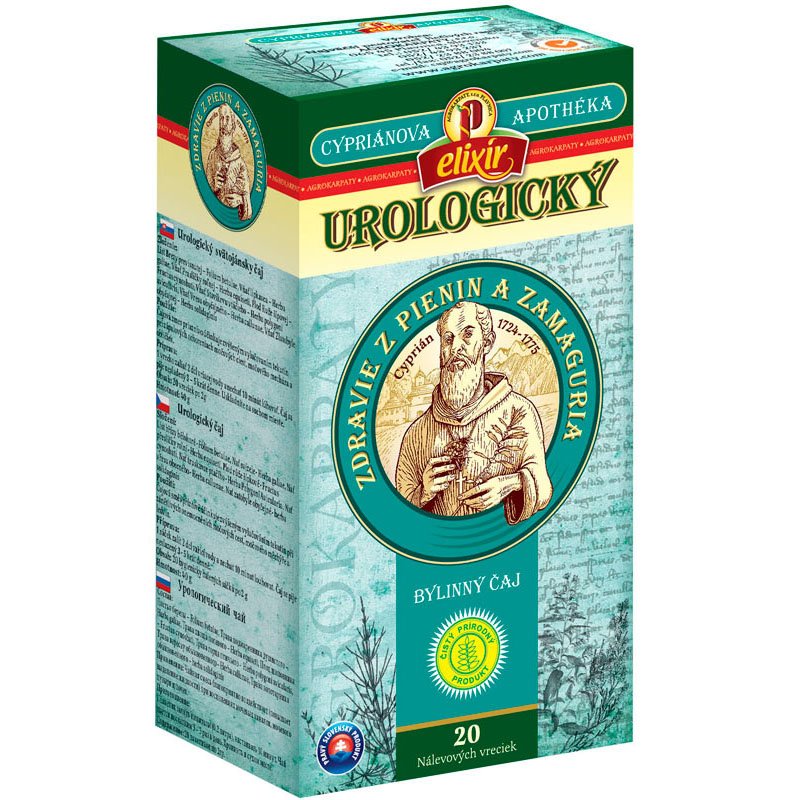
Agrokarpaty, the Slovak herbal-tea producer that makes all our teas, is based in Plavnica, not far from the Pieniny. Its Cyprian’s Apothecary line, part of the Elixir range, is named in Brother Cyprian’s honour. The teas come in traditional-style packaging. Each pack carries a portrait of Brother Cyprian with his dates, 1724–1775, above the Slovak name Cypriánova Apothéka.
| Tea | Herbs | Character |
|---|---|---|
| Cyprian Bronchial Herbal Tea | Cowslip, thyme, mallow, marshmallow, ribwort plantain, yarrow, chamomile | Soft, floral, warm and silky |
| Cyprian Elderflower & Linden Herbal Tea | Elderflower, chamomile, lime blossom, Moorish mallow, meadowsweet, raspberry leaf | Delicate, floral and silky |
The Cyprian teas contain the same blends as their Elixir counterparts; only the name and packaging differ. You can read more about the herbs inside them in our guides to bronchial herbal teas and linden and elderflower tea.
Herbs From Cyprian’s Garden
If you’d like to taste some of the herbs that are grown again in the monastery’s beds, several of them are available as single-herb teas:
- Pot marigold (Calendula officinalis): bright orange petals with a mild, gently earthy flavour.
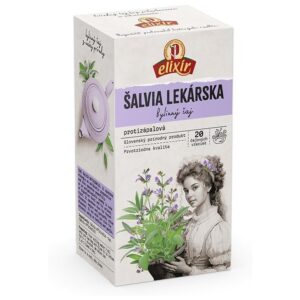
- Sage (Salvia officinalis): a classic monastery-garden herb, whose name comes from the Latin salvere, “to be well”. Warm, savoury and aromatic.
- Hyssop (Hyssopus officinalis): a fragrant, slightly minty member of the mint family, long grown in European monastery gardens.
A few words of care. Sage and hyssop are not suitable during pregnancy or breastfeeding, or for people with epilepsy, and they’re best enjoyed in moderation. Pot marigold and chamomile belong to the daisy family, so avoid them if you’re allergic to those plants. Each product page lists the full safety information for that tea.
Visiting the Red Monastery
Červený Kláštor is one of the most beautiful corners of Slovakia, and it’s well worth the journey:
- The monastery is now a museum with displays on the Carthusian and Camaldolese monks and their way of life, including Brother Cyprian.
- From the village you can take the traditional Dunajec raft trip, riding wooden rafts steered by boatmen in folk costume through the gorge of the Pieniny.
- The walking trail to the Three Crowns viewpoint on the Polish side gives you the view Cyprian supposedly launched himself from.
Frequently Asked Questions
Who was Brother Cyprian?
Brother Cyprian (Franz Ignatz Jäschke, 1724–1775) was a Camaldolese monk, pharmacist and healer at the Red Monastery (Červený Kláštor) in Slovakia’s Pieniny region. He compiled the oldest surviving herbarium from the territory of Slovakia and is remembered in legend as “the flying monk”.
Did Brother Cyprian really fly?
There’s no historical evidence that he did. The story of his wings and his flight from the Three Crowns is a legend, although it has been told for more than 200 years.
Where is Cyprian’s herbarium today?
The original is kept by the Slovak National Museum in Bratislava, where it has been since 1984.
Are Cyprian’s Apothecary teas made to Brother Cyprian’s recipes?
The Cyprian’s Apothecary line is named after Brother Cyprian and inspired by the monastery-pharmacy tradition. It contains the same blends as the matching Elixir teas.
What’s the difference between Elixir and Cyprian teas?
Cyprian’s Apothecary is a line within the Elixir range. The blends are the same as their Elixir counterparts, in traditional-style packaging.
Taste a Little Slovak History
Brother Cyprian’s herbarium has outlived him by 250 years, and the herbs he pressed between its pages still grow in the Pieniny meadows. Brew a cup, and raise it to the flying monk of the Red Monastery.
- After Meal Tea
Elixir Pot Marigold Herbal Tea – Calendula officinalis (20 Tea Bags, 40g)
£3.99 Add to basket - Single-Herb Teas
Elixir Pure Sage Herbal Tea – Salvia officinalis (20 Tea Bags, 40g)
£3.99 Add to basket
Related Reading
- Slovakian Herbal Tea: From Mountain Meadow to Your Cup
- Linden and Elderflower Tea: Europe’s Classic Winter Infusions
- Bronchial Herbal Teas: Traditional Blends for the Colder Months
This article describes the history, legends and traditional uses of herbs and is provided for general information only. Our products are herbal teas, not medicines, and are not intended to diagnose, treat, cure or prevent any disease or medical condition. Traditional use does not necessarily mean that a particular effect has been scientifically proven. If you are pregnant, breastfeeding, taking medication, have a medical condition, have known allergies, or are unsure whether a tea is suitable for you or your child, please speak to your doctor or pharmacist before consuming it.